
Some Background
 Caterpillars are, collectively, the larvae of moths and butterflies, which are members of the Lepidoptera order. There are over 110,000 species in this order, so nearly everyone has had or will have, hands-on experiences with these guys — especially in outdoor crops and gardens. However, some will invade greenhouses and other structures.
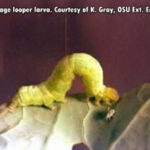
Caterpillars are varied in name as some are called loopers or worms (i.e., cabbage loopers, tent caterpillars, hornworms, and inchworms), some are soil pests such as cutworms. In contrast, others are called borers, but one fact remains that they are always moth or butterfly larvae and can be extremely destructive.
How They Become a Problem
Infestations begin at different times of the year depending upon the life cycle of the particular moth or butterfly. Many start their lives by hatching out of overwintered eggs late in the spring. Many will repeat this season progress multiple times over during a growing season, while some have just one annual fling.
Exponential growth, like that inevitable with aphids, should not be expected from caterpillars. They make up for their lack of reproductive capacity, though, by being ravenous feeders cutting gaping chunks and holes out of leaves or chopping into or tunneling through some fruits.
Moth caterpillars like corn earworm are notorious for quickly damaging crops. Some species have been known to defoliate entire trees — even whole forests. Some are so gluttonous you hear them eating — which has been said of sizable tomato hornworms.
Many species of caterpillars begin the season as overwintered eggs. They hatch and mobilize to their feeding area, which at its furthest will be very close at hand. For example, Madame Butterfly lays her eggs at the base of a tree whose leaves will feed her next season’s offspring.
If your timing is right, you may be a witness to an army of caterpillars climbing the trunk of a tree. Once the army of caterpillars reaches the tree’s leaves, the feeding frenzy begins. Other species overwinter as pupae in a chrysalis or cocoon.
They begin their annual ritual by emerging as adult moths in the spring, feeding on nectar while seeking a mate, then laying eggs directly onto the source of food: the plant foliage or fruit of the host plant.
A Serious Pest
Caterpillars, with their cutting mouthparts devour host plants, causing an exceptional amount of severe damage if not treated early on or prevented. The key to caterpillar control does not necessarily lie in the thoroughness of your scouting but in the knowledge of your foe and the methodology and timing of your effort.
Your area university’s cooperative extension office — since caterpillars are usually regional in distribution — will probably be able to provide information as to what species are known to be problematic in your area and at what time of year they are doing what they do.
The extension agent may also be able to prescribe curative action but may not be well-versed in the GreenMethods, and thus may not be able to offer fully all the nontoxic ways to get the job done — and there are many.

Moths and butterflies, as we’ve indicated, develop through a complete metamorphosis: reduce egg laying, manage larva, pupae, and control emergence of adult populations, which is usually done at a specific time of year based on species. (Unlike aphids which develop constantly throughout the season by way of an incomplete metamorphosis, molting through multiple immature nymphal stages before reaching, uninterrupted by pupation, their adulthood.)
In light of this, scouting will be done differently at various times during the season depending on what species is being scouted. For example, codling moths are pests that require frequent monitoring to track adult populations effectively.
Moreover, if you see a caterpillar with “eggs” on its back, they’re not eggs as that’s not how these things work. More than likely the “eggs” you’re seeing are actually the pupae of parasitic wasps in cocoons of their own.
Some Advice on Caterpillar Control

Caterpillars can be fast-feeding and merciless pests to have in your crop. The damage crops suffer can be severe to total crop loss through complete defoliation. Most medium-sized to large trees can handle two to three consecutive years of defoliation, but most of the crops grown in organic gardens or cole crops are not as resilient.
To most growers, a large thrips infestation can spell doom. Caterpillars are not usually very difficult to detect, but speed becomes a major issue as the irreversible damage they cause can form rapidly. During the appropriate times of year when most caterpillars species are likely to appear, maintaining biocontrols and preventive efforts, like those targeting natural enemies, can help.
For The Scout
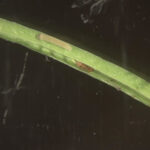
Assuming we’re writing about a species that overwinters as an egg, the scout should begin by looking for eggs in the immediate area. Following this, he or she will look for the destructive larvae. The caterpillars will likely be apparent by either their presence (assuming they are not nocturnal), feeding damage or feces. The feces can be very large and detectable in vast quantities, especially if dealing with one of the bigger moth or butterfly species.
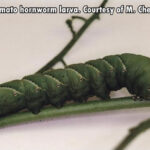
Tomato hornworms are a good example of this: as larvae, they can grow to three to four inches in length, and their poop can be as large as quarter-inch chunks.
Some Solutions to Controlling Caterpillars

The good news is caterpillars, regardless of size, color and area of activity — all of which are quite varied and easily identifiable for what they are and can be simple to control if multiple and aggressive steps are taken quickly. Knowing the specific traits of the caterpillar species you expect to deal with is fundamental to your success, but it is not difficult.
There are many tools available to you, including caterpillar control products such as neem oil or other commercial products, which contain an active ingredient effective in their eradication. You may also use strategies targeting beneficial insects or fungus gnats as part of an integrated pest management program.