Product Description
Cucumeris Sachets for Thrips Control
Natural Thrips and Mite Control with Amblyseius Cucumeris Sachets
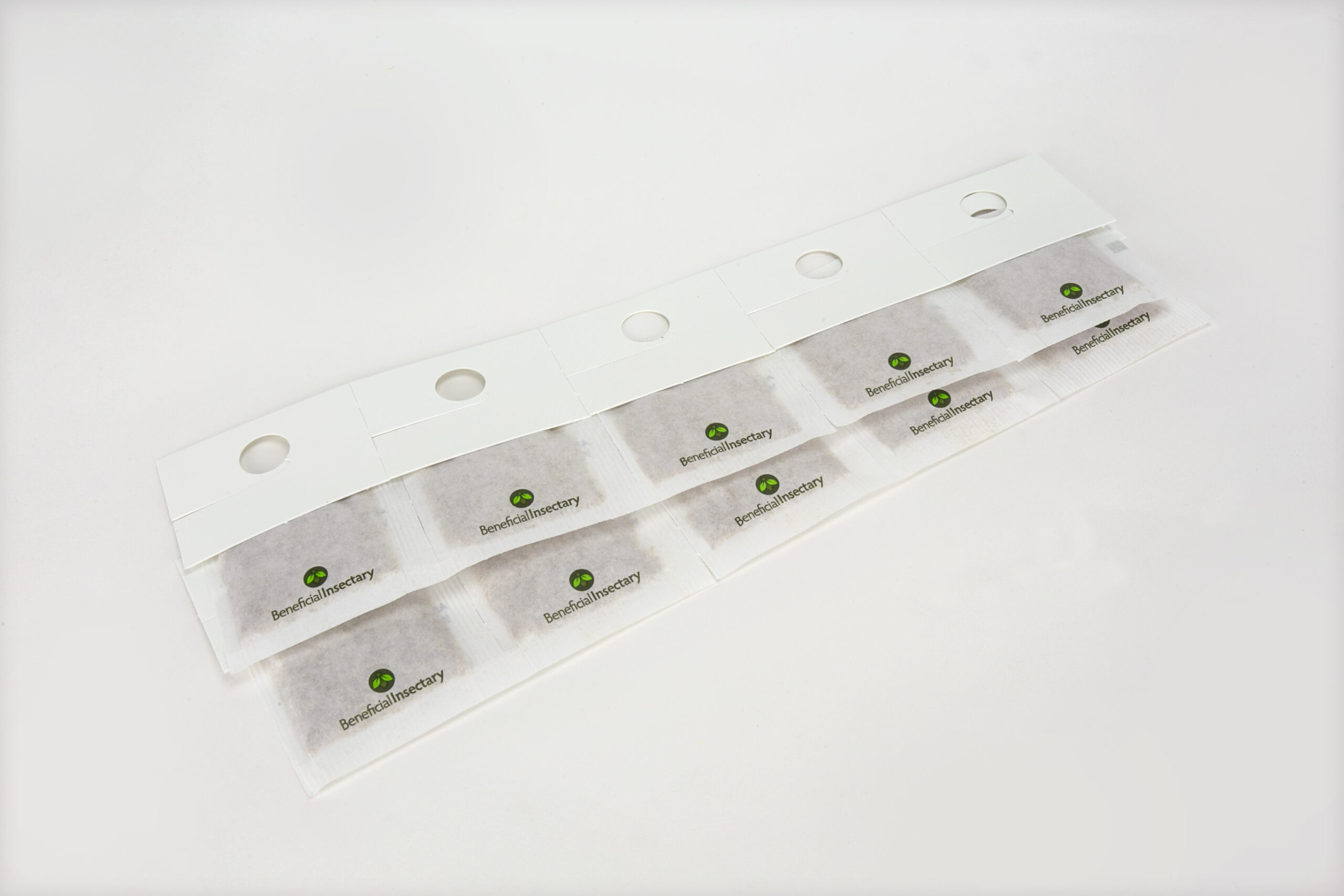
Use Cucumeris sachets for thrips control as a cornerstone of your Integrated Pest Management (IPM) strategy. These sachets contain approximately 1,000 Amblyseius cucumeris predatory mites, each with a food supply that sustains reproduction for 4 to 5 weeks. This slow-release method provides consistent and long-lasting suppression of thrips larvae and complements soil-based Biological Control Agents (BCAs) for complete thrips and mite control.
How Cucumeris Sachets Work
Amblyseius cucumeris is a phytoseiid predatory mite known as the first mite species observed to feed on thrips. These generalist predators target the first larval life stage of thrips and also contribute to mite control by preying on pest mite species. The sachets offer a low-maintenance release method, ideal for commercial greenhouses, propagation areas, and basket crops.
Storage and Handling Instructions
- Store sachets at moderate humidity (55–65ºF) and never refrigerate.
- Avoid storing in air-conditioned rooms or coolers, as this can dry out the sachets.
- Use sachets immediately upon receipt or store for no longer than 8 hours.
Application Instructions
Bulk Material (Tubes or Bags)
Release mites early or late in the day, avoiding hot, dry conditions. Gently rotate tubes or bags before use to evenly distribute mites. Release by tapping onto plant foliage or by using a spreader or URB (Universal Release Box). Leave the empty container in the crop area for 24 hours to ensure full release.
Sachets on a Stick
For propagation trays and liners, place one sachet per tray or every other tray if touching. Keep the sachet above soil level to avoid moisture wicking.
Sachets on a Hook
Hang directly on the plant near the stem. Use multiple sachets for large or wide plants. Avoid laying sachets on the soil to prevent mold.
Monitoring Thrips Control Results
- Look for a reduction in thrips larvae as a primary success indicator.
- Predatory mites are fast-moving and may not be easily visible.
- Distinct mite eggs may aid in scouting, but results are best measured by lower pest pressure.
Tips for Optimal Results
- Avoid letting sachets dry out completely.
- Prevent direct sun exposure and extreme moisture.
- Compatible with many pesticides, making them ideal for IPM programs.